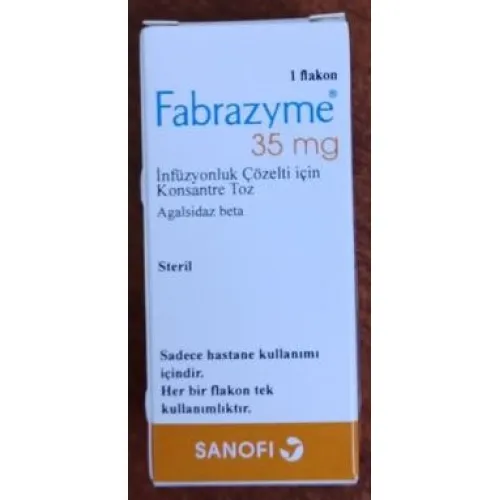
Product image of Fabrazyme (Agalsidase Beta) 35mg Vials supplied by GNH India

Fabrazyme

Active Ingredient:
Agalsidase Beta
Form:
Vials
Brand:
Fabrazyme
Origin:
USA

Fabrazyme (Agalsidase Beta Vials) 35mg

Agalsidase beta, the active ingredient in Fabrazyme, is a recombinant enzyme presented as a 35mg vial for intravenous use. It is used as enzyme replacement therapy in patients with Fabry disease, a genetic disorder caused by a deficiency in alpha-galactosidase A enzyme. GNH India supplies Fabrazyme as a licensed, GDP-compliant international pharmaceutical supplier serving hospitals and clinics worldwide.

Fabrazyme is indicated for long-term enzyme replacement therapy in patients with a confirmed diagnosis of Fabry disease. It helps to reduce the accumulation of globotriaosylceramide (GL-3) in the body's cells, which is a hallmark of Fabry disease.

Strength

35mg

Pack Size

1s

Storage

2-8°

Manufacturer / TM Owner

Sanofi

1
Pack/s
This product is added to your enquiry list

Request a Quote

Please fill out the form below and our team will get back to you shortly with pricing and further information.

A minimum order value applies. Our team will confirm the exact amount or quantity after reviewing your requirements.

Indications & Clinical Uses

Fabrazyme is used in the treatment of Fabry disease, a genetic disorder that affects the body's ability to break down certain fats. It is indicated for long-term enzyme replacement therapy in patients with a confirmed diagnosis of Fabry disease.

  • Fabry disease: Helps to reduce the accumulation of globotriaosylceramide (GL-3) in the body's cells, which can damage organs and tissues.
  • Enzyme replacement therapy: Provides the missing alpha-galactosidase A enzyme to patients with Fabry disease.
  • Long-term treatment: Intended for ongoing use to manage the symptoms and progression of Fabry disease.

How It Works

  • Fabrazyme works by replacing the deficient alpha-galactosidase A enzyme in patients with Fabry disease. This enzyme is responsible for breaking down globotriaosylceramide (GL-3), a fatty substance that accumulates in the body's cells due to the enzyme deficiency. By providing the missing enzyme, Fabrazyme helps to hydrolyze the accumulated GL-3, reducing its harmful effects on various organs and tissues.

Side Effects

Fabrazyme may cause side effects, although not everyone gets them. Common side effects include chills, fever, feeling of cold, nausea, vomiting, headache, and abnormal skin sensations such as burning or tingling. Serious or rare side effects are less common but can be more severe.

Common Side Effects

  • Chills
  • Fever
  • Feeling of cold
  • Nausea
  • Vomiting
  • Headache
  • Abnormal skin sensations such as burning or tingling

Serious or Rare Side Effects

  • Infusion-related reactions
  • Allergic reactions
  • Hypersensitivity reactions
  • Anaphylaxis

Precautions & Warnings

Fabrazyme should be used with caution in certain situations. It is important to inform your healthcare provider about any other medical conditions, allergies, or medications you are taking. Pregnant women should avoid using Fabrazyme unless necessary, and breastfeeding women should consult their doctor about the risks and benefits.

  • Allergies: Inform your doctor if you have any known allergies to agalsidase beta or any of the other ingredients in Fabrazyme.
  • Pregnancy: Experience with the use of Fabrazyme in pregnant women is limited. As a precaution, it is recommended to avoid the use of Fabrazyme during pregnancy.
  • Breastfeeding: Fabrazyme passes into breast milk. Talk to your doctor about the risks and benefits of breastfeeding versus continuing treatment with Fabrazyme.
  • Other medications: Tell your doctor if you are using other medicines that contain chloroquine, amiodarone, benoquin, or gentamicin. There is a theoretical risk of reduced agalsidase beta activity.
  • Storage: Store in a refrigerator (between 2°C and 8°C).

Avoid Interactions

Fabrazyme may interact with other medications, which can affect its effectiveness or increase the risk of side effects. It is important to inform your healthcare provider about all the medications you are taking, including prescription, over-the-counter, and herbal products.

Major Interactions (Avoid)

  • Chloroquine: There is a theoretical risk of reduced agalsidase beta activity.
  • Amiodarone: There is a theoretical risk of reduced agalsidase beta activity.
  • Benoquin: There is a theoretical risk of reduced agalsidase beta activity.
  • Gentamicin: There is a theoretical risk of reduced agalsidase beta activity.

Moderate Interactions (Monitor Closely)

  • Other medications that may affect the immune system or enzyme activity should be used with caution and monitored closely.

Frequently Asked Questions

Fabrazyme is used as enzyme replacement therapy in patients with Fabry disease. It helps to reduce the accumulation of globotriaosylceramide (GL-3) in the body's cells, which can damage organs and tissues. Fabrazyme provides the missing alpha-galactosidase A enzyme to patients with Fabry disease, helping to manage the symptoms and progression of the disease.

Agalsidase Beta, the active ingredient in Fabrazyme, works by replacing the deficient alpha-galactosidase A enzyme in patients with Fabry disease. This enzyme is responsible for breaking down globotriaosylceramide (GL-3), a fatty substance that accumulates in the body's cells due to the enzyme deficiency. By providing the missing enzyme, Fabrazyme helps to hydrolyze the accumulated GL-3, reducing its harmful effects on various organs and tissues.

The recommended dosage for Fabrazyme is 1 mg/kg of body weight given once every two weeks. The prescriber will determine the appropriate dose based on the patient's individual needs and response to the treatment. It is important to follow the prescriber's instructions and not to adjust the dose without consulting them.

Experience with the use of Fabrazyme in pregnant women is limited. As a precaution, it is recommended to avoid the use of Fabrazyme during pregnancy. Fabrazyme passes into breast milk. Talk to your doctor about the risks and benefits of breastfeeding versus continuing treatment with Fabrazyme. No studies have been conducted to examine the effects of Fabrazyme on fertility.

To order Fabrazyme from GNH India, submit an enquiry on the product page at gnhindia.com with the required quantity. GNH India supplies hospitals, pharmacies, and procurement teams across international markets. The team will ask you to confirm your trade or institutional credentials and will reply with pricing, availability, shipping (including cold-chain where relevant), and the import paperwork.

Fabrazyme and Galafold are both used in the treatment of Fabry disease, but they work in different ways. Fabrazyme is an enzyme replacement therapy that provides the missing alpha-galactosidase A enzyme, while Galafold is a small molecule that stabilizes the existing enzyme. The choice between these treatments depends on the patient's individual needs and response to the treatment.

Fabrazyme should be stored in a refrigerator (between 2°C and 8°C). The reconstituted solution should not be stored and should be diluted promptly. The diluted solution can be stored for a maximum of 24 hours at a temperature between 2°C and 8°C. It is important to follow the storage and handling instructions provided with the medication to ensure its effectiveness and safety.

Fabrazyme is administered by intravenous infusion. The medication is reconstituted with water for injections and diluted with sodium chloride 0.9% injection solution before administration. The infusion rate can be increased gradually based on the patient's tolerance. It is important to follow the administration instructions provided by the healthcare provider.

The most serious risks to watch for with Fabrazyme include infusion-related reactions, allergic reactions, hypersensitivity reactions, and anaphylaxis. These reactions can be severe and may require immediate medical attention. It is important to inform your healthcare provider if you experience any unusual symptoms during or after the infusion.

Fabrazyme should not be used by patients who are allergic to agalsidase beta or any of the other ingredients in the medication. It should also be used with caution in patients with a history of severe infusion-related reactions. Pregnant women should avoid using Fabrazyme unless necessary, and breastfeeding women should consult their doctor about the risks and benefits of continuing treatment with Fabrazyme.

Published by

GNH India Pharmaceuticals Limited

Licensed pharmaceutical supplier

Last updated:

References

Disclaimer

At GNH India, we aim to provide information that is expert-reviewed, accurate, and reliable. However, all content on this platform is intended for general informational purposes only and does not constitute professional medical advice, diagnosis, or treatment. While efforts are made to maintain accuracy and currency, the information may contain errors, omissions, or may not reflect the latest developments. Always consult a qualified healthcare professional regarding any medical concerns.

All product names, brand names, trademarks and registered trademarks displayed on this website are the property of their respective owners. This website and its operator are not affiliated with, endorsed by, or authorized by any such trade mark owners unless expressly stated. Any reference to product names or trademarks is made solely for descriptive and informational purposes. No commercial relationship, sponsorship, approval, or association with any trademark owner should be inferred. Information provided herein does not constitute promotion, advertising, or an offer for sale of any medicinal product and is intended solely for general informational purposes.

All trademarks and brand names displayed on this website are used strictly in accordance with the provisions of the Trade Marks Act, 1999, specifically Sections 30 and 30(1) governing fair use. Trademark ownership has been accurately attributed under the "Manufacturer/ TM Owner" section in compliance with statutory requirements.

Ordering Process

Simple, Secure, and Seamless

Learn how our streamlined ordering process guarantees fast, compliant, and reliable access to essential medicines worldwide.

Quote request form

01

Submit Quote Request Form

Tell us what medications you need by filling out our simple form and uploading a valid document.

Price estimate review

02

We Review & Send Estimate

Our licensed pharmacists will verify your details and provide you with a detailed cost estimate.

Secure payment

03

Confirm & Make Payment

Discuss any queries, approve the estimate, and complete your payment.

Worldwide delivery

04

Get Delivered

Your medicines, safely packed and delivered to your door or nearest airport — hassle-free.

Quality You Can Trust

Our internationally recognized certifications underscore our commitment to safety, quality, and excellence.







