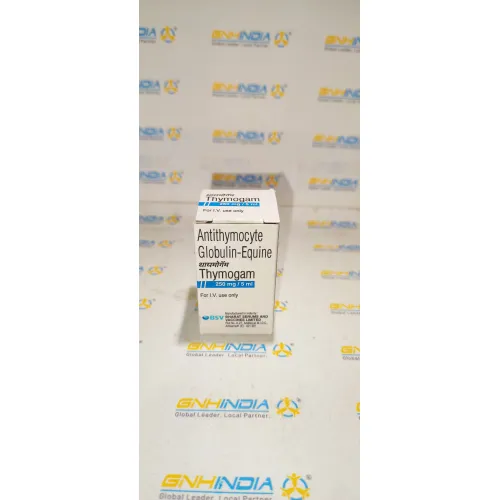
Product image of Thymogam (Antithymocyte Globulin-Equine ) 250mg/5ml Vials supplied by GNH India

Thymogam

Active Ingredient:
Antithymocyte Globulin-Equine
Form:
Vials
Brand:
Thymogam
Origin:
India

Thymogam (Antithymocyte Globulin-Equine Vials) 250mg/5ml

Antithymocyte Globulin-Equine, the active ingredient in Thymogam, is an immunosuppressant presented as a 250mg/5ml vial for intravenous use. It is used to prevent acute graft-versus-host disease in organ transplantation and to treat acute organ transplant rejection.

GNH India supplies Thymogam as a licensed, GDP-compliant international pharmaceutical supplier serving hospitals and transplant centers worldwide.

Strength

250mg/5ml

Pack Size

1s

Storage

2-8°

Manufacturer / TM Owner

Bharat Serums & Vaccines Limited

1
Pack/s
This product is added to your enquiry list

Request a Quote

Please fill out the form below and our team will get back to you shortly with pricing and further information.

Indications & Clinical Uses

Thymogam is an antithymocyte globulin used in the management of immune responses in transplant patients.

  • Acute graft-versus-host disease: Prevents the immune system from attacking transplanted organs.
  • Organ transplant rejection: Treats acute rejection episodes in transplant recipients.
  • Aplastic anemia: Used in the treatment of aplastic anemia to suppress immune activity.
  • Bone marrow transplantation: Part of the conditioning regimen to prevent graft rejection.

How It Works

  • Thymogam works by binding to T-lymphocyte surface antigens, causing complement-mediated lysis and depletion of T cells. This suppresses cellular immunity, reducing the risk of graft rejection and graft-versus-host disease in transplant patients.

Side Effects

Thymogam may cause various side effects, ranging from mild to severe.

Common Side Effects

  • Fever: A common reaction to the infusion.
  • Chills: Often experienced during or after administration.
  • Nausea: May occur as a gastrointestinal side effect.
  • Headache: A frequent complaint among patients.
  • Dizziness: Can occur during treatment.
  • Rash: Skin reactions may be observed.

Serious or Rare Side Effects

  • Anaphylaxis: Severe allergic reactions requiring immediate medical attention.
  • Thrombocytopenia: Low platelet counts that can lead to bleeding.
  • Leukopenia: Reduced white blood cell counts increasing infection risk.
  • Proteinuria: Presence of protein in the urine indicating kidney issues.
  • Infectious complications: Increased susceptibility to infections due to immunosuppression.

Precautions & Warnings

Thymogam should be used with caution and under medical supervision.

  • Allergic reactions: Monitor for signs of anaphylaxis during and after infusion.
  • Infection risk: Patients should be monitored for signs of infection due to immunosuppression.
  • Renal function: Regularly check renal function as proteinuria may occur.
  • Pregnancy: Use during pregnancy should be carefully considered due to potential risks.
  • Administration: Administer through a vascular shunt and monitor continuously.
  • Storage: Store at 2-8°C: keep refrigerated, protect from light, do not freeze or shake.

Avoid Interactions

Thymogam may interact with other medications, potentially altering its effectiveness or increasing the risk of side effects.

Major Interactions (Avoid)

  • Live vaccines: Avoid concurrent use due to increased risk of infection.
  • Other immunosuppressants: Combined use may enhance immunosuppression and increase infection risk.
  • Cytotoxic drugs: May increase the risk of severe bone marrow suppression.

Moderate Interactions (Monitor Closely)

  • Antihypertensives: May require dose adjustment due to potential hypotension.
  • Diuretics: Monitor for signs of electrolyte imbalances.
  • Corticosteroids: May need dose adjustment to manage side effects.

Frequently Asked Questions

Thymogam is used to prevent acute graft-versus-host disease in organ transplantation and to treat acute organ transplant rejection. It is also used in the treatment of aplastic anemia and as part of the conditioning regimen for bone marrow transplantation.

Antithymocyte Globulin-Equine works by binding to T-lymphocyte surface antigens, causing complement-mediated lysis and depletion of T cells. This suppresses cellular immunity, reducing the risk of graft rejection and graft-versus-host disease in transplant patients.

The dosage of Thymogam is determined by the prescribing physician based on the patient's condition, weight, and response to treatment. It is important to follow the doctor's instructions and not to adjust the dose without medical advice.

The safety of Thymogam during pregnancy and breastfeeding has not been established. It should be used with caution and only if the potential benefits outweigh the risks. Consult a healthcare provider for personalized advice.

To order Thymogam from GNH India, submit an enquiry on the product page at gnhindia.com with the required quantity. GNH India supplies hospitals, pharmacies, and procurement teams across international markets and will ask the buyer to confirm trade or institutional credentials. The team will reply with pricing, availability, shipping, and the import paperwork.

Thymogam is a polyclonal antibody preparation that specifically targets T-lymphocytes. Compared to other immunosuppressants, it has a broader range of activity against T-cells, making it particularly effective in preventing graft rejection and graft-versus-host disease. However, the choice of immunosuppressant depends on individual patient factors and the specific clinical situation.

Thymogam should be stored at 2-8°C, refrigerated, protected from light, and not frozen or shaken. It should be administered through a vascular shunt and monitored continuously during infusion to manage potential side effects.

Thymogam is administered intravenously, typically through a vascular shunt. The infusion should be carefully monitored, and the patient should be observed for any signs of adverse reactions during and after administration.

The most serious risks associated with Thymogam include anaphylaxis, severe allergic reactions, thrombocytopenia, leukopenia, and infectious complications. Patients should be closely monitored for these risks, and immediate medical attention should be sought if any severe reactions occur.

Thymogam should not be used by individuals with a known hypersensitivity to the active ingredient or any of the excipients. It should be used with caution in patients with a history of severe allergic reactions, infections, or those who are pregnant or breastfeeding. Always consult a healthcare provider for personalized advice.

Published by

GNH India Pharmaceuticals Limited

Licensed pharmaceutical supplier

Last updated:

Disclaimer

At GNH India, we aim to provide information that is expert-reviewed, accurate, and reliable. However, all content on this platform is intended for general informational purposes only and does not constitute professional medical advice, diagnosis, or treatment. While efforts are made to maintain accuracy and currency, the information may contain errors, omissions, or may not reflect the latest developments. Always consult a qualified healthcare professional regarding any medical concerns.

All product names, brand names, trademarks and registered trademarks displayed on this website are the property of their respective owners. This website and its operator are not affiliated with, endorsed by, or authorized by any such trade mark owners unless expressly stated. Any reference to product names or trademarks is made solely for descriptive and informational purposes. No commercial relationship, sponsorship, approval, or association with any trademark owner should be inferred. Information provided herein does not constitute promotion, advertising, or an offer for sale of any medicinal product and is intended solely for general informational purposes.

All trademarks and brand names displayed on this website are used strictly in accordance with the provisions of the Trade Marks Act, 1999, specifically Sections 30 and 30(1) governing fair use. Trademark ownership has been accurately attributed under the "Manufacturer/ TM Owner" section in compliance with statutory requirements.


Ordering Process

Simple, Secure, and Seamless

Learn how our streamlined ordering process guarantees fast, compliant, and reliable access to essential medicines worldwide.

Quote request form

01

Submit Quote Request Form

Tell us what medications you need by filling out our simple form and uploading a valid document.

Price estimate review

02

We Review & Send Estimate

Our licensed pharmacists will verify your details and provide you with a detailed cost estimate.

Secure payment

03

Confirm & Make Payment

Discuss any queries, approve the estimate, and complete your payment.

Worldwide delivery

04

Get Delivered

Your medicines, safely packed and delivered to your door or nearest airport — hassle-free.

Quality You Can Trust

Our internationally recognized certifications underscore our commitment to safety, quality, and excellence.